OFF GRID LIVING
COMPLETEHow we set up an off-grid property from scratch — caravan base, dedicated workspace, outdoor living, and a full solar + water system.
We wanted to live differently. Not as an experiment — as an actual plan. The goal was a self-sufficient setup on our own land, where we weren't dependent on the grid for power or water, and where we had space to build, grow things, and work without neighbours ten metres away.
This is a completed chapter. We set up the property, got it liveable, got it powered, got it working. What's here is a walkthrough of how we did it.
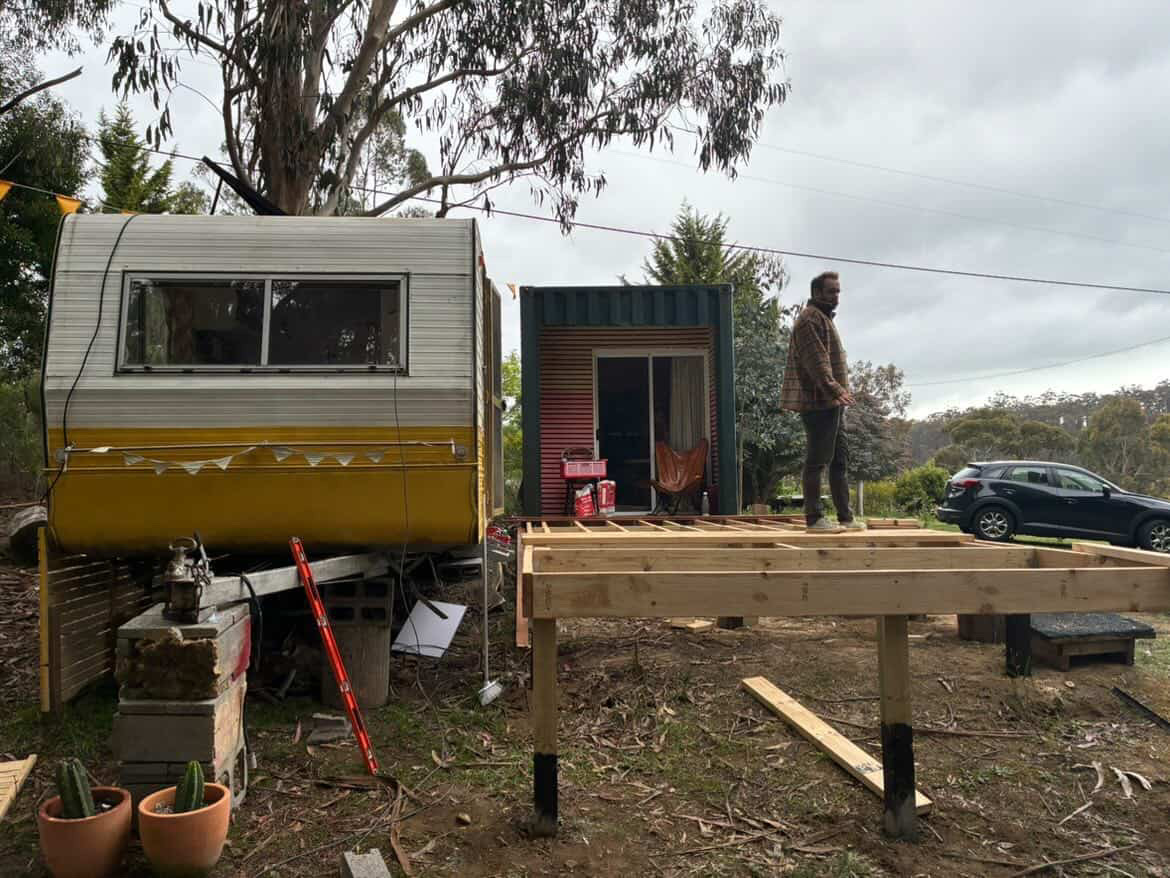
The caravan is the anchor of the whole setup. Before anything else was sorted — before the deck was built, before the power was running properly, before the work womb existed — the caravan was home base. It still is.
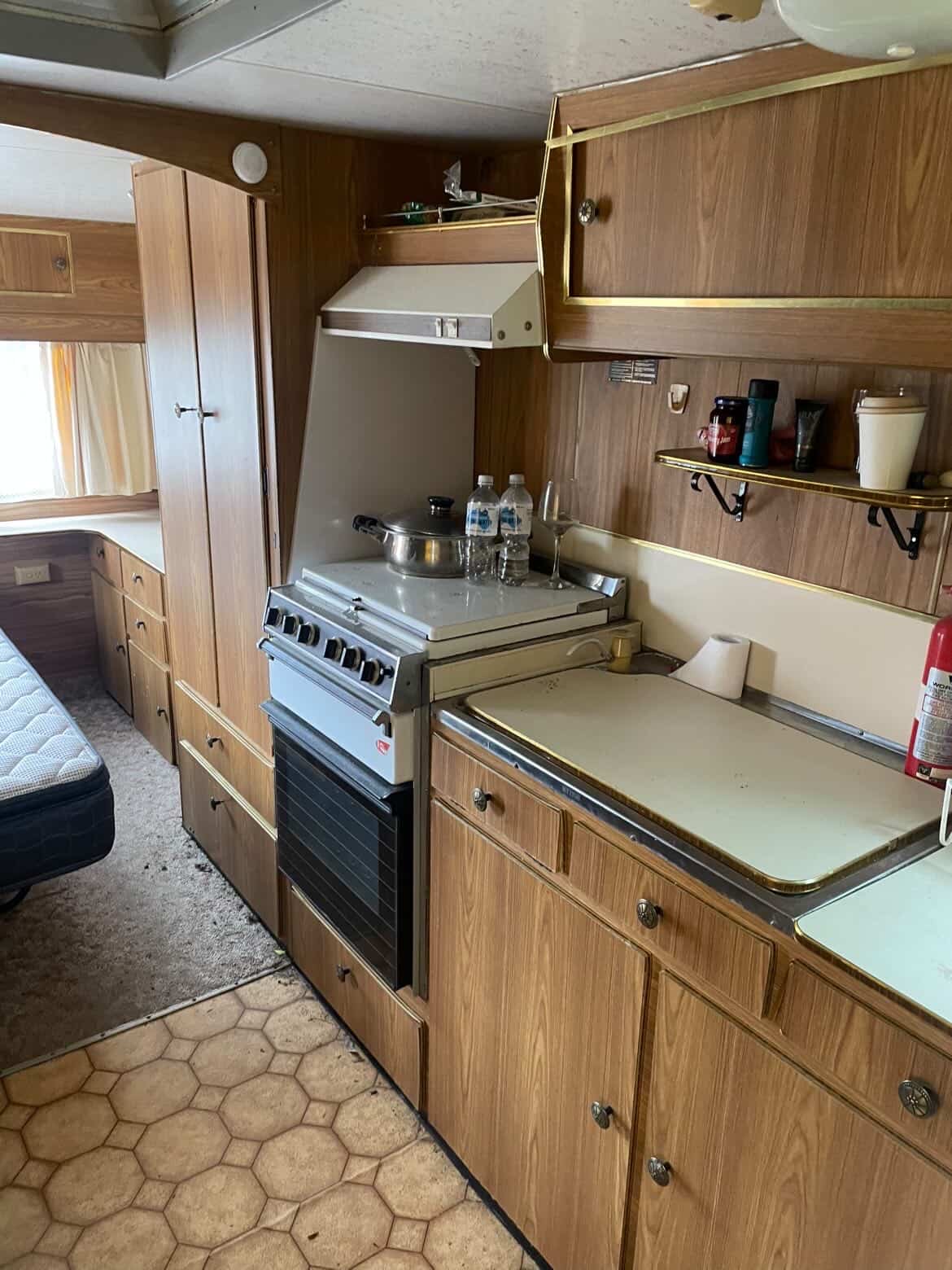
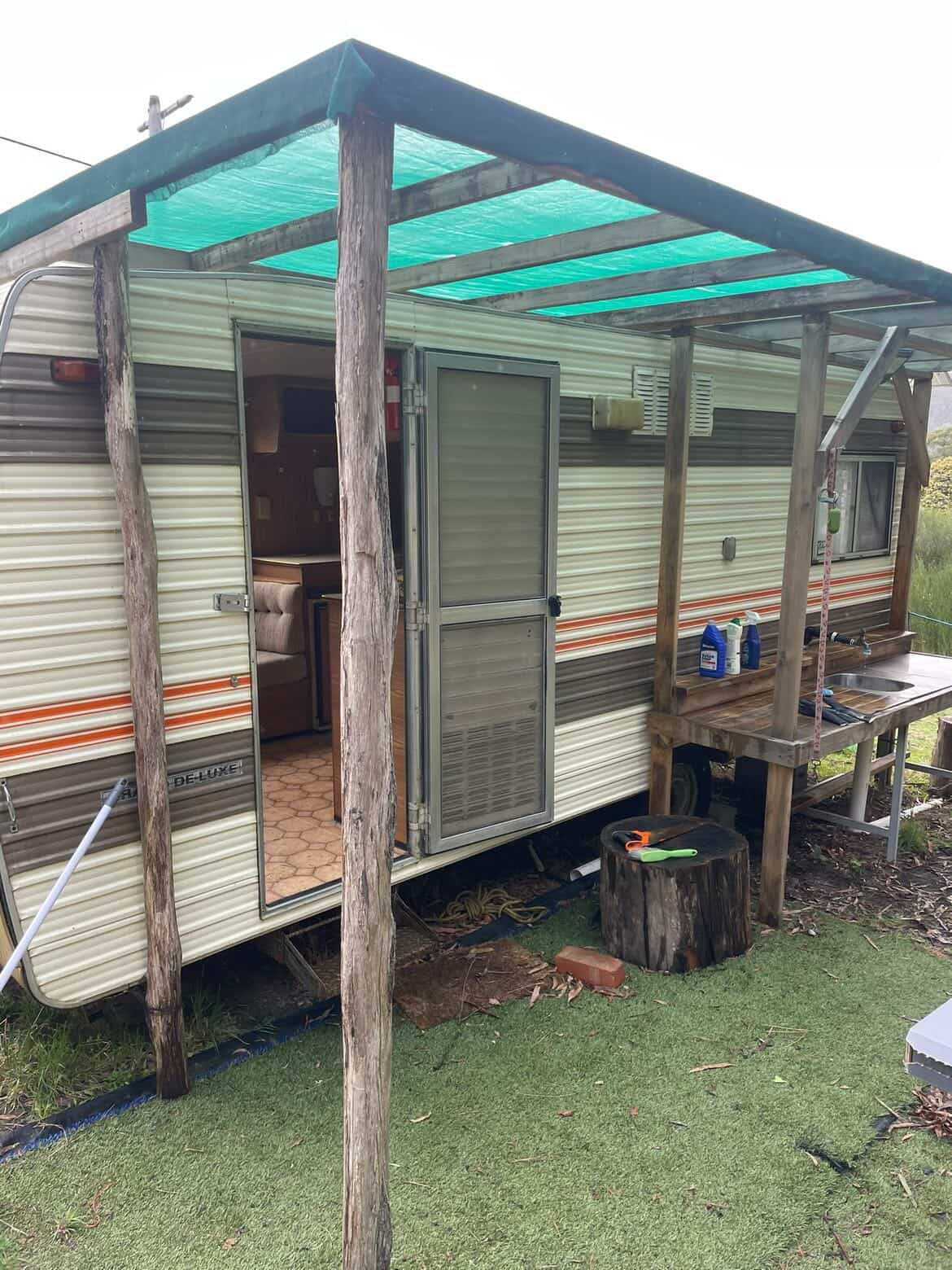
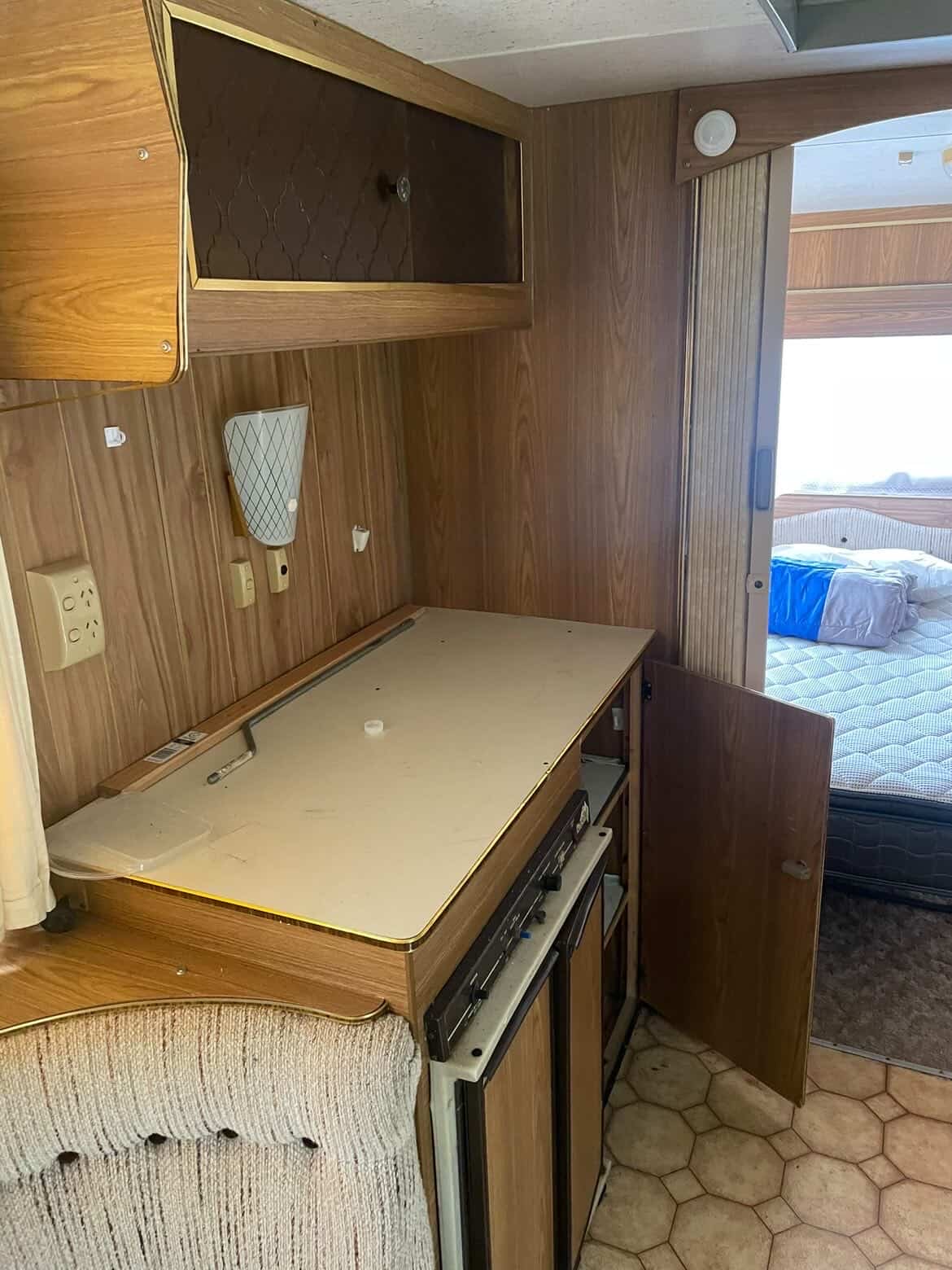
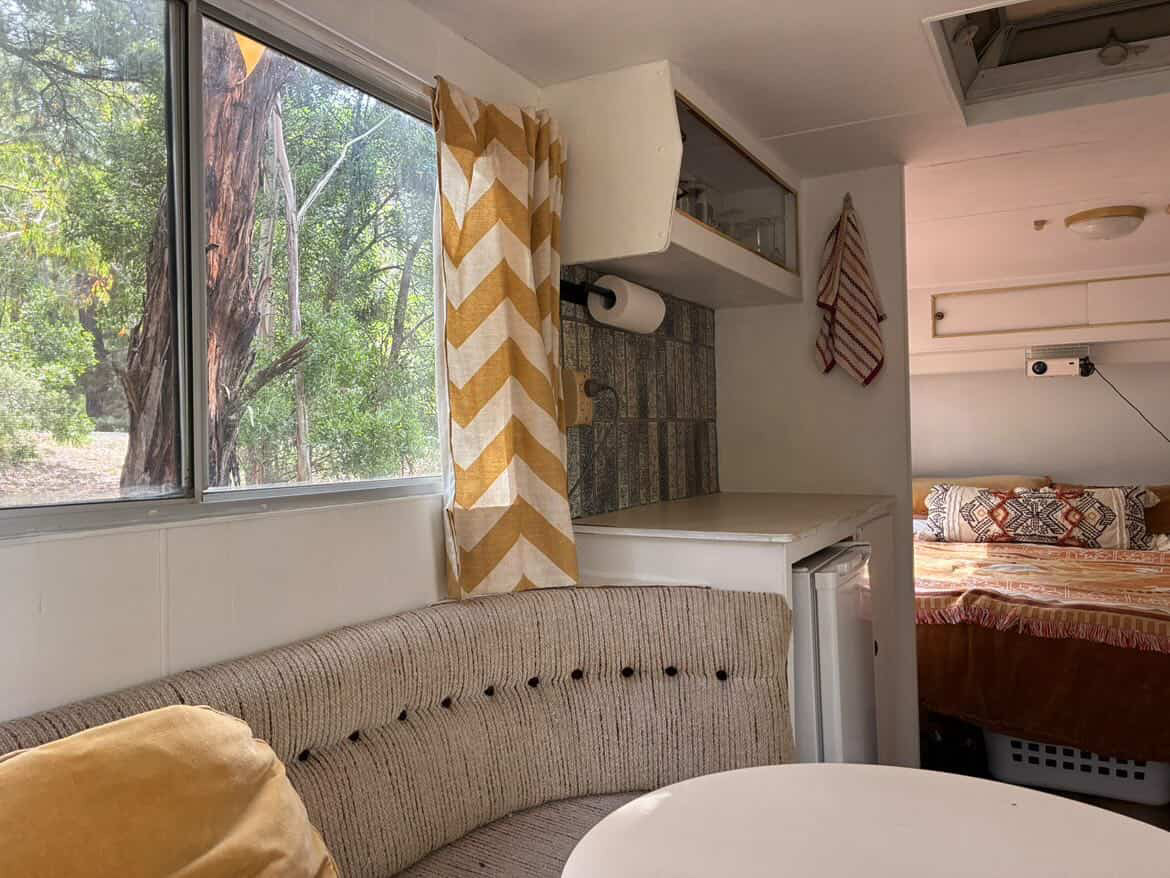
We picked it up and moved it onto the land, set it level, and got it habitable. Insulation was the first real job — the standard-issue stuff that comes with a caravan is not built for anything but summer camping. We sorted that. Then lighting, then a proper cook setup, then making it feel like somewhere you'd actually want to be rather than somewhere you're tolerating.
I needed somewhere to work that wasn't the caravan. Not because the caravan is bad — it's fine for living — but because mixing where you sleep with where you build things is a fast way to do neither well.
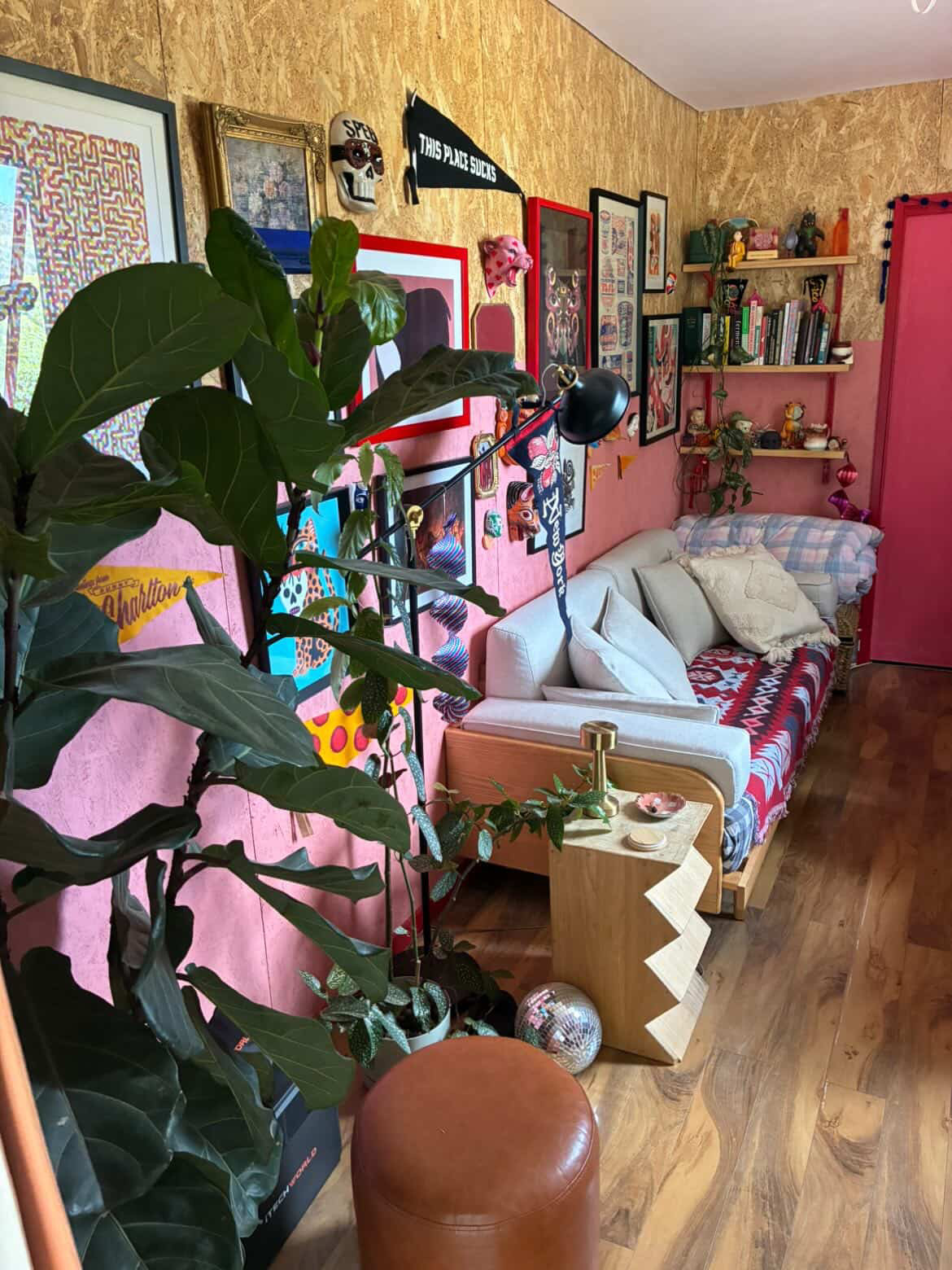
The Work Womb is a dedicated creative and work space on the property. Separate structure, separate headspace. When you're in there, you're working. When you leave, you're done.
It's got decent light, power, desk space, and enough separation from the main living area that it actually functions as a proper work environment. It's where most of the projects on this site got built.
The deck is the social connective tissue of the property. It's the space between the caravan and the work womb, and it's where you end up when you're not doing either.
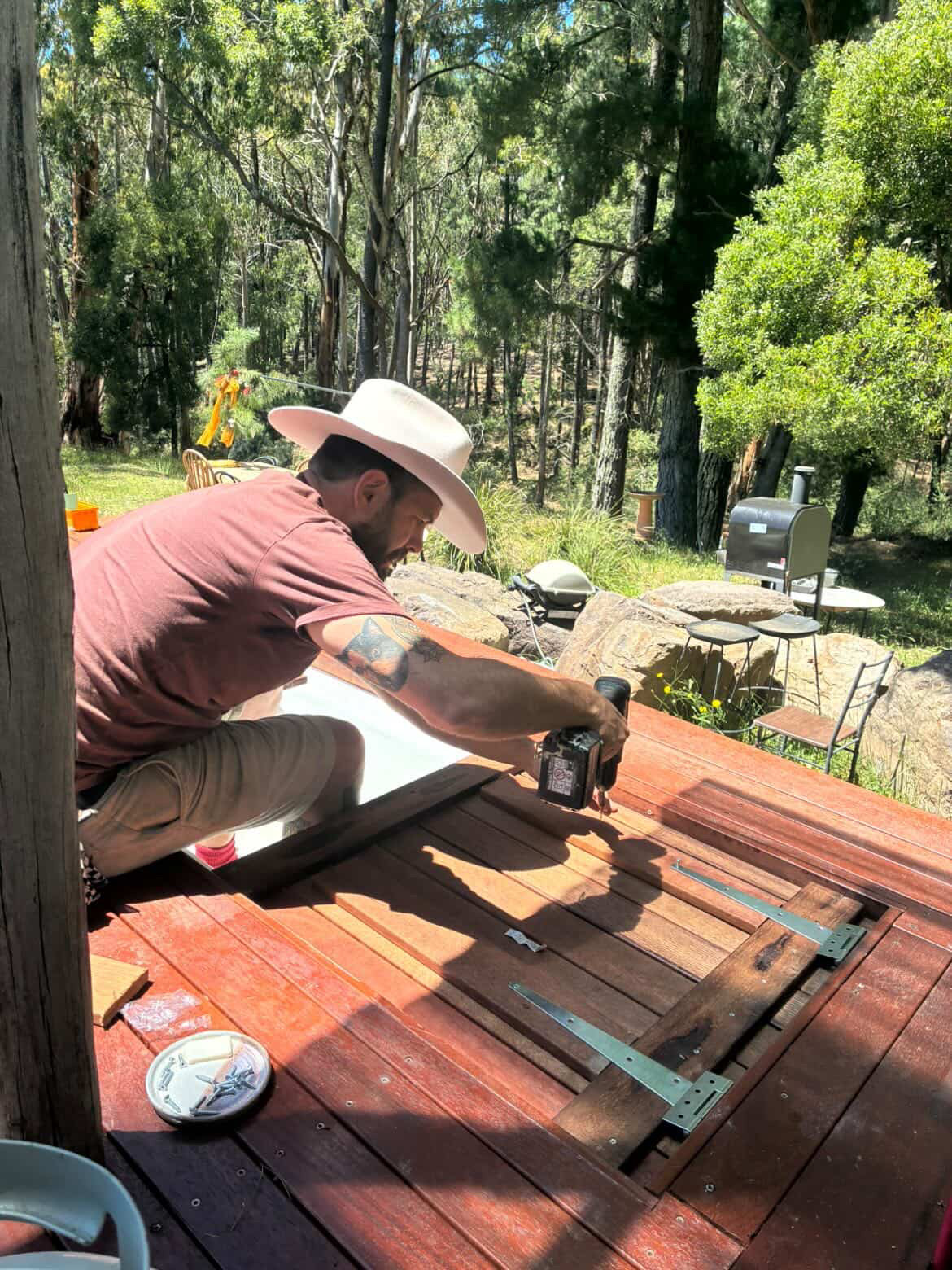
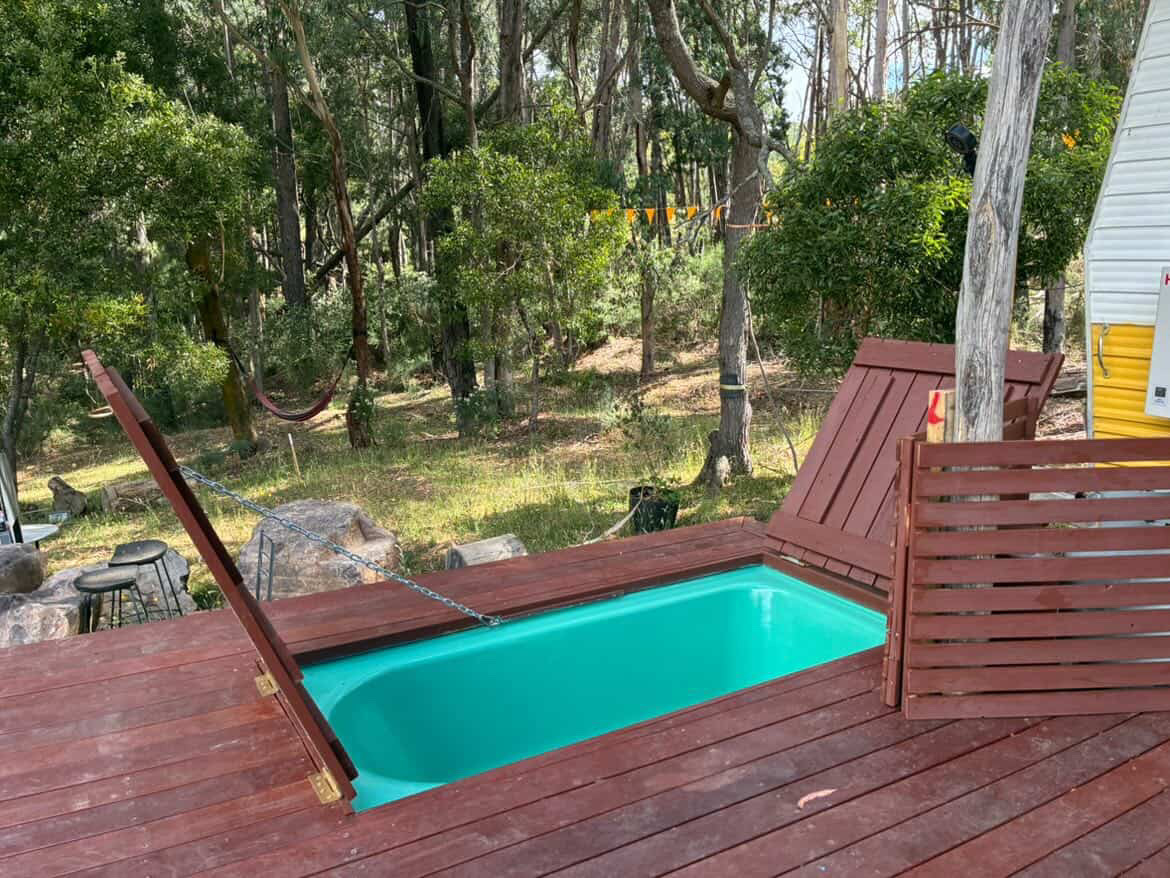
We built it ourselves. Treated timber, dug in posts, got it level enough that things don't roll off tables. It took a weekend and it made an enormous difference to how the whole property feels — suddenly there was an outdoor room, a place to have dinner, a place to sit in the evening and look at what you've built.
This was the part that made everything else sustainable rather than just temporary.
Power: Solar panels feeding into a battery bank via a charge controller. Enough stored capacity to run the caravan and work womb through a full overcast day without touching reserves. Inverter for anything that needs mains voltage. It's not huge — we sized it for actual use, not theoretical peaks — and it's been reliable.
Water: Collected and stored on site. Tank fed from roof catchment, filtered before use. The goal was no reliance on external water supply for anything except drinking water, which we bring in. Everything else — washing, cooking, outdoor use — runs off the tank.
Getting these two systems right was the point where the property stopped feeling like camping and started feeling like living.